
Launching a cannabis vape business in Canada requires navigating a complex web of federal and provincial regulations, but the process follows a clear sequence: obtain your Cannabis Act licence, develop compliant product formulations and packaging, establish rigorous testing protocols, and implement comprehensive recordkeeping systems before your first sale. Entrepreneurs entering this market, particularly those interested in emerging cannabinoids like potent THCP disposables face stricter oversight than most consumer product categories, with flavour bans, child-resistant packaging mandates, and batch-tracking requirements that can make or break operational success.
The stakes are high. A single labeling error can trigger product recalls, financial penalties, and reputational damage that takes years to repair. Yet thousands of small businesses have successfully launched compliant vape operations by treating regulatory compliance as a core business function rather than an afterthought.
This guide walks you through the critical planning and compliance steps for launching a THC vape cartridge and disposable business in Canada in 2026. You’ll learn which licences you need before ordering inventory, how to structure product testing to meet Health Canada standards, what packaging elements are non-negotiable under current law, and how to build financial models that account for compliance costs most startups underestimate.
The cannabis vape sector continues to grow despite regulatory headwinds, driven by consumer demand for discreet, portable consumption methods. But success depends on understanding that compliance isn’t a barrier to entry. It’s your competitive advantage. Companies that embed regulatory excellence into their operations from day one protect their investment, build consumer trust, and position themselves for sustainable growth in a market where shortcuts lead to shutdowns.
Understanding the Legal Foundation for Cannabis Vape Products
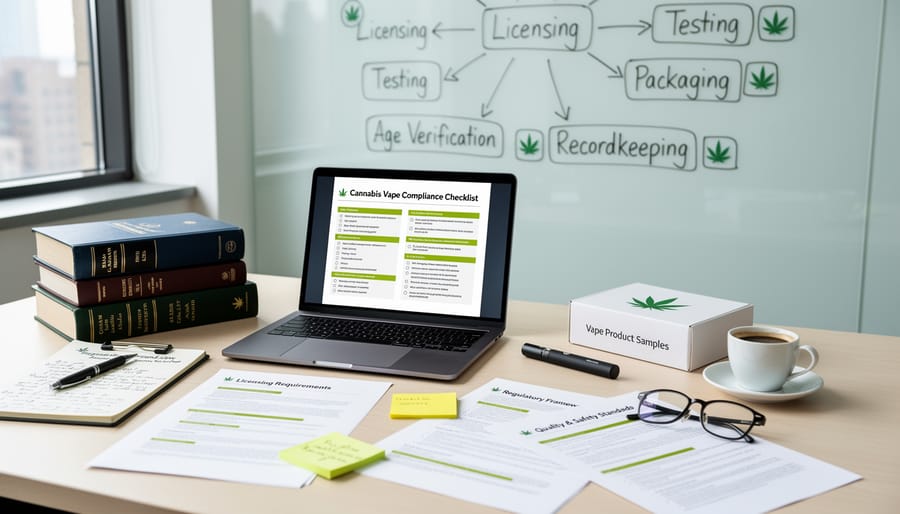
Canada’s cannabis vape business operates under a unified federal regulatory framework that applies to both recreational and medical markets. The Cannabis Act and Cannabis Regulations form the primary legal foundation you need to understand before launching THCp vape cartridges or disposables. These regulations govern every aspect of production, testing, packaging, labelling, and sale, and they apply equally whether you’re targeting recreational consumers or medical cannabis patients.
Recreational cannabis became legal in Canada on October 17, 2018, establishing a regulated market that allowed adults to possess up to 30 grams of legally-produced cannabis and grow up to four cannabis plants per household. This legalization created the regulatory infrastructure that now governs all cannabis products, including vaping extracts. The Cannabis Regulations set specific requirements for inhaled extracts, which cover vape cartridges and disposable vape products containing THCp or other cannabinoids.
A critical amendment on June 19, 2021 introduced flavour restrictions that fundamentally changed the inhaled cannabis extract market. The regulations now prohibit production, sale, promotion, packaging, or labelling of inhaled cannabis extracts that have a flavour other than the flavour of cannabis. This means your THCp vape products cannot contain fruit, mint, dessert, or any other non-cannabis flavours. The restriction applies equally to medical and non-medical products, there is no exemption for medical cannabis patients.
This flavour policy eliminates a common misconception that medical cannabis products face different flavour rules. Whether you’re planning to serve recreational users or medical patients, your vape liquids must comply with the same cannabis-flavour-only requirement. The regulatory equivalence extends beyond flavour: testing requirements, packaging standards, labelling rules, and recordkeeping obligations apply uniformly across both market segments.
Understanding this unified framework is essential because it shapes every decision in your business plan. You cannot design products for one market and assume different rules apply to the other. Health Canada enforces these regulations through licensed seller requirements, including mandatory testing of vaping liquids for contaminants and advance notice requirements for new cannabis products expected to be made available for sale. Non-compliance in any area can prevent your product from reaching market or result in enforcement action after launch.
What You Need Before You Start: Tools, Resources, and Prerequisites
Before you file paperwork or order your first batch of cartridges, you need a foundation of planning tools, professional relationships, and capital reserves. Launching a compliant THCp vape business isn’t a matter of testing a product and hoping for the best, it requires coordinated preparation across legal, financial, technical, and operational domains. Entrepreneurs who skip this groundwork often discover gaps mid-launch, when fixing them costs far more than building them in from the start.
Your business plan is the blueprint. It should include a market analysis that identifies your target customers, competitive positioning, and realistic sales projections for the THCp vape segment. Financial projections need to account for startup costs, product development, testing, packaging, initial inventory, as well as operating expenses like compliance audits, insurance, and ongoing lab testing. Map your supply chain from raw material sourcing through manufacturing partnerships to distribution channels, and identify every point where regulatory compliance intersects with your operations.
You’ll need professional advisors who understand cannabis regulations. Legal counsel with cannabis industry experience can interpret the Cannabis Act and Cannabis Regulations as they apply to your specific products and business structure. A financial advisor or accountant familiar with cannabis businesses can help you finance equipment structure your books for compliance reporting, and plan for the tax implications of cannabis sales. These aren’t optional consultations, they’re core members of your launch team.
Secure your vendor relationships early. Essential partners include:
- A certified testing lab that can analyze vaping liquids for contaminants and provide compliant documentation
- Legal counsel with cannabis regulatory expertise to review compliance at every stage
- A packaging supplier experienced in plain packaging and labelling requirements for cannabis extracts
- Product development partners who understand THCp formulation and vape hardware compatibility
- A financial advisor to build projections, manage cash flow, and plan for regulatory cost changes
- Adequate capital reserves to cover testing, compliance revisions, and extended timelines before revenue begins
Testing labs often require advance contracts and have lead times for new clients, so establish these relationships months before your planned launch. The same applies to packaging suppliers who can navigate the June 2021 flavour restrictions and plain packaging rules, finding a partner who gets compliance right the first time saves costly redesigns. Capital reserves matter because compliance timelines rarely match revenue timelines; you need enough runway to absorb delays without jeopardizing your launch.
Critical Compliance Warnings: What Will Halt Your Launch

Before you invest capital or finalize supplier contracts, understand the compliance failures that will stop your THCp vape business at the gate. Health Canada enforces strict rules for cannabis extracts, and violations carry consequences that range from product recalls to license suspension. Catching these issues early saves time, money, and your business’s reputation.
Untested Products Will Not Reach Market
Licensed sellers must test vaping liquids for contaminants before sale. If you skip testing or fail to document results properly, your products cannot legally enter the market. Testing is non-negotiable: Health Canada requires verified lab results showing your THCp vape cartridges and disposables meet contamination standards. Without these records, you’re operating outside the Cannabis Act framework from day one.
Flavour Violations Trigger Immediate Action
Since June 19, 2021, inhaled cannabis extracts can only carry the flavour of cannabis itself. This restriction applies to both recreational and medical products. If your THCp vapes contain fruit, menthol, or any non-cannabis flavouring, including terpene blends marketed as “natural berry” or “mint”, you’re in violation. Regulators treat flavour infractions seriously because they’re seen as youth-targeted marketing.
Packaging and Labelling Errors Cost Launch Momentum
Plain packaging rules for cannabis extracts are detailed and prescriptive. Missing a required warning label, using incorrect THC content disclosure, or failing to meet child-resistant packaging standards will force you to repackage inventory before sale. Packaging compliance isn’t cosmetic, it’s a legal threshold.
Missing Product Notices Delay Everything
You must provide advance notice for new cannabis products expected to be made available for sale. Failing to submit this notice on time delays your launch and signals poor regulatory awareness to inspectors.
Inadequate Recordkeeping Invites Audits
The Cannabis Regulations require you to retain testing records, adverse reaction reports, and product notices. If you can’t produce these documents during an inspection, you’ll face scrutiny and potential penalties. Compliance isn’t just about meeting standards, it’s about proving you met them, with records that stand up to audit.
Step-by-Step: Launching Your THCp Vape Product Line
Step 1: Review Applicable Cannabis Act and Regulations Requirements
Your first action is to conduct a thorough audit of the Cannabis Act and Cannabis Regulations, the two federal documents that govern every aspect of your THCp vape business. Start at the official Justice Laws website () where you’ll find the current, consolidated text of both the Act and Regulations. Focus specifically on provisions that apply to inhaled cannabis extracts, which is the regulatory category for vape cartridges and disposables. Pay close attention to the June 19, 2021 amendment restricting inhaled extracts to cannabis flavour only, as this applies equally to medical and non-medical products and will shape your product formulation decisions.
Health Canada’s guidance documents provide practical interpretation of these rules, including requirements for contaminant testing of vaping liquids and advance notice for new products. Download and read these supplementary documents alongside the regulations themselves. Create a compliance checklist as you review, noting every requirement that applies to your specific product line, testing protocols, packaging rules, recordkeeping obligations, and reporting timelines.
This is not a task to rush or delegate without oversight. If any provision seems ambiguous or you’re uncertain how it applies to THCp formulations specifically, consult a cannabis law specialist before proceeding. The cost of legal counsel now is minor compared to the regulatory penalties and business disruption that follow non-compliance.
Step 2: Prepare and Submit Product Notice for New Cannabis Products
Before you can legally sell THCp vape cartridges or disposables in Canada, you must provide advance notice to the appropriate regulatory authority of new cannabis products you expect to make available for sale. This notice is a mandatory step under the Cannabis Regulations, not an optional courtesy, and failure to submit it can delay or halt your market entry.
Your product notice must include specific information: a clear product description (including format, form, and intended use), the expected date you plan to make the product available for sale, and any other details required by the Regulations. For THCp vapes, this means identifying whether you’re introducing a cartridge or disposable format, the concentration of cannabinoids, and the anticipated launch date. Submit your notice early, well before your planned release, to allow time for any regulatory follow-up and to establish a documented timeline.
Document your submission carefully. Keep copies of the notice itself, proof of submission (confirmation emails, tracking numbers), and any correspondence with regulators. These records are part of your compliance file and will be essential if you’re audited or need to prove you followed proper procedure. Store this documentation securely and treat it as a foundational component of your compliance system. Starting with a complete, accurate product notice signals your commitment to regulatory adherence and sets the stage for a compliant launch.
Step 3: Test Vaping Liquids for Contaminants and Maintain Records
Testing your vaping liquids for contaminants isn’t optional, it’s a mandatory step before any THCp vape product can legally reach the Canadian market. Health Canada requires that licensed sellers must test all vaping liquids for contaminants, and you need documentation proving compliance.
Start by identifying a certified laboratory with experience in cannabis extract analysis. Your lab should test for heavy metals (lead, arsenic, cadmium, mercury), microbial contaminants (yeast, mold, E. coli, Salmonella), pesticide residues, and residual solvents if your extraction process uses them. Request a detailed test report that shows both the methodology and detection limits used.
When you receive results, compare them against Health Canada’s threshold standards for cannabis extracts. Any result flagged as a fail requires you to halt that batch immediately, do not attempt to dilute, reprocess, or quietly shelf the product. Investigate the contamination source with your manufacturer, implement corrective measures, and retest before considering a new production run.
Create a dedicated recordkeeping system that links each batch of vaping liquid to its test results, production date, and final packaged products. Retain these records for the period specified in the Cannabis Regulations, keeping them easily accessible for potential audits. Without clean test results and organized documentation, your product cannot legally enter the market, and attempting to bypass this step exposes your business to regulatory enforcement and serious liability.
Step 4: Apply Plain Packaging and Labelling with Flavour Restrictions
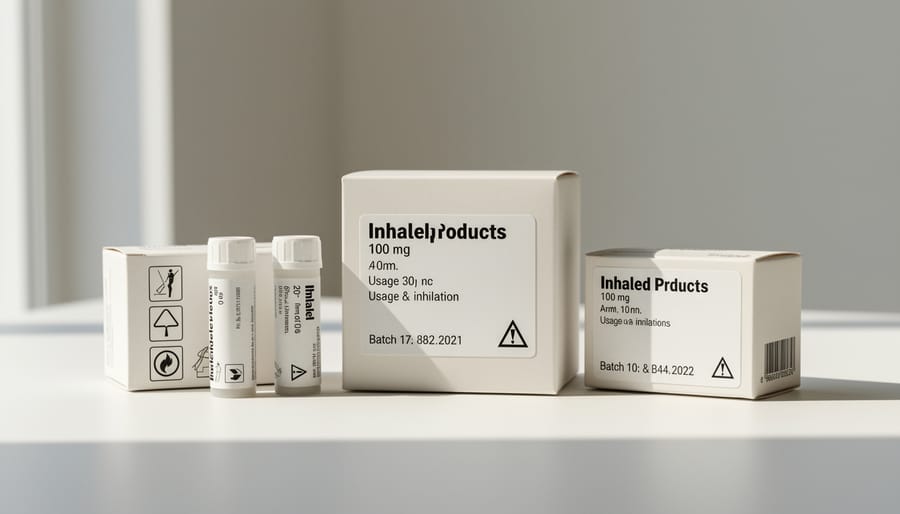
Your vape cartridges and disposables must comply with Canada’s plain packaging rules and the critical flavour restriction for inhaled cannabis extracts. Start by auditing your current packaging against the June 19, 2021 packaging rules, which prohibit any flavour other than cannabis flavour in inhaled extracts, this means no fruit, mint, dessert, or terpene-derived flavours marketed as distinct from cannabis. Your packaging must be plain, child-resistant, and tamper-evident, with no branding elements beyond your brand name in a prescribed format.
Every label requires standardized health warnings, THC and CBD content per unit and per package, a yellow health warning banner, and the cannabis symbol. Work closely with your packaging supplier to ensure materials meet child-resistance standards and that label placement, font size, and warning text comply exactly with federal specifications. Submit draft labels for internal review against the Cannabis Regulations checklist before printing production runs.
Non-compliant packaging will halt your launch and require costly reprints, so build compliance verification into your supplier contract. Request written confirmation that all components meet federal standards, and order sample runs to test functionality and label legibility before committing to bulk orders. Keep dated records of all packaging approvals and supplier certifications, these are critical audit documents that demonstrate your due diligence if regulators review your business.
Step 5: Prepare Adverse Reaction Reporting and Recordkeeping Systems
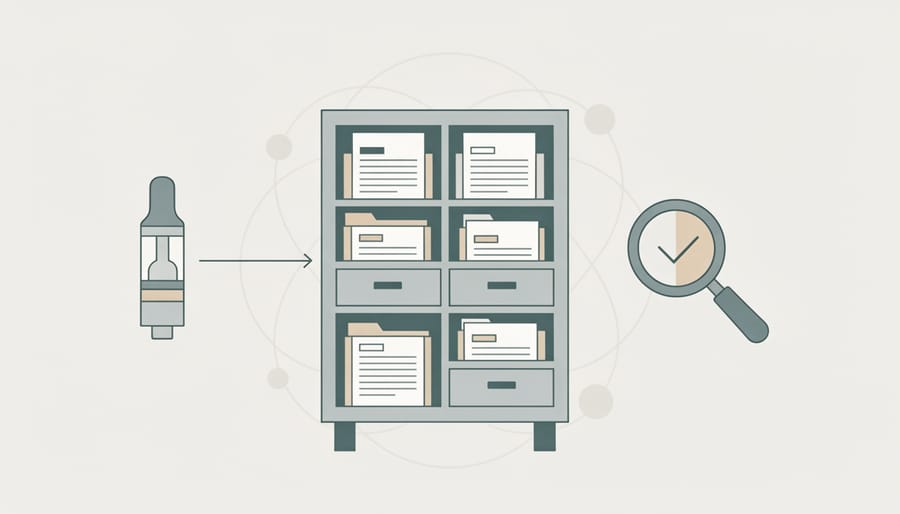
Health Canada requires cannabis businesses to prepare adverse reaction summary reports and maintain comprehensive records for regulatory oversight. Setting up robust systems now protects you from compliance failures during inspections.
Your recordkeeping system must capture all documentation related to product notices, testing results, packaging approvals, supplier agreements, and quality control measures. The Cannabis Regulations mandate that you retain records for specific periods, typically two years for most transaction and product records, though some categories require longer retention. Check the exact timelines for each record type in the regulations, and when in doubt, keep everything longer rather than discarding early.
Adverse reaction reporting requires a structured process to document any customer complaints or health concerns related to your THCp vape products. Create a standardized intake form that captures the date, product batch number, customer contact information, detailed description of the adverse reaction, and any follow-up actions taken. Train your team to recognize reportable events and escalate them immediately. Even if a complaint seems minor, document it, patterns can reveal quality issues before they become serious.
Build your recordkeeping around digital systems with automated backups and version control. Spreadsheets work for startups, but dedicated compliance software scales better as your business grows. Organize records by product line and date, and conduct quarterly audits to verify completeness. An inspector should be able to trace any product from sale back through testing, packaging, and manufacturing using your records alone.
Financial Planning for Your Cannabis Vape Business
Launching a THCp vape business demands a clear-eyed look at your financial runway. Startup costs in the cannabis sector run higher than many consumer goods businesses because compliance isn’t optional, it’s a line item you fund before your first sale.
Budget for these major categories from the outset:
- Product testing and lab fees for contaminant analysis on every vaping liquid batch
- Compliant packaging and labelling that meets plain packaging rules and flavour restrictions
- Legal and advisory services to interpret the Cannabis Act and review your compliance strategy
- Inventory and supply chain costs, including minimum order quantities from licensed producers
- Marketing within regulatory limits, which narrows your promotional options significantly
- Contingency reserves for regulatory changes, failed tests, or packaging redesigns
Testing alone can cost several hundred to over a thousand dollars per batch, depending on the lab and contaminant panel. If a batch fails, you absorb the cost and retest, so build that risk into your cash flow model. Packaging expenses also compound quickly: compliant labels, child-resistant containers, and plain exterior packaging for THCp cartridges and disposables add up per unit, especially at lower volumes.
Set aside at least 20 percent of your operating budget as a regulatory buffer. The June 2021 flavour amendment caught some operators off guard, forcing costly packaging and formulation changes mid-production. You can’t predict every regulatory shift, but you can plan for the inevitability of adjustment costs.
When mapping out the next steps after a plan prioritize funding that covers six to twelve months of fixed costs, rent, salaries, testing, compliance overhead, before revenue stabilizes. Small cannabis businesses often underestimate the time between product readiness and steady sales, and cash flow gaps close companies that might otherwise succeed.
Traditional bank financing remains limited in the cannabis space, so explore alternative funding: angel investors with sector experience, cannabis-focused venture funds, or revenue-based financing if you have early traction. Some founders bootstrap with personal savings or loans from family, but recognize that compliance systems and testing protocols eat capital faster than conventional retail. Conservative projections and a funded contingency plan keep you operational when the unexpected happens.
Verifying Compliance and Preparing for Market Entry
Before you make your THCp vape products available for sale, run a thorough compliance verification to catch any gaps that could trigger regulatory issues. This final audit protects your business and confirms you’re ready for market entry.
Start with an internal compliance review. Assign someone (or hire a compliance consultant) to walk through every regulatory requirement you’ve addressed in the previous steps. Your verification process should follow this sequence:
- Audit all documentation to confirm every required record is complete, accurate, and organized for easy retrieval during inspections.
- Confirm lab test results for all vaping liquids show no contaminants and that certificates of analysis are current and properly filed.
- Verify packaging compliance by comparing your final packaging against Cannabis Regulations requirements, including plain packaging rules, flavour restriction compliance, and all mandatory warnings.
- Review product notices to ensure you’ve submitted advance notice for each new product and retained proof of submission.
- Conduct a pre-launch compliance review with your legal advisor or third-party compliance specialist to identify any remaining risks.
- Establish an ongoing monitoring process for adverse reactions, product quality issues, and regulatory updates that may affect your operations.
Consider a third-party compliance audit before launch. An external reviewer brings fresh eyes and experience with Health Canada expectations. They can spot issues you’ve overlooked and validate that your recordkeeping systems will hold up under scrutiny.
Create a compliance checklist that mirrors the Cannabis Act and Cannabis Regulations requirements. This living document should be reviewed monthly and updated whenever regulations change. Include clear ownership for each compliance task so accountability is built into your operations.
Once verification is complete, plan a soft launch with limited distribution. This lets you test your supply chain, gather real-world product feedback, and refine your adverse reaction reporting before scaling. Monitor your first 30 days closely and align this phase with your startup financial planning to ensure you have reserves for adjustments. Build compliance reviews into your quarterly calendar, and stay connected with industry associations that track regulatory changes affecting cannabis vape products.
Frequently Asked Questions About THCp Vape Business Compliance
The compliance questions that trip up new THCp vape entrepreneurs usually stem from uncertainty about how federal cannabis rules apply to specific product formulations and business structures. Here’s what matters most when you’re getting your operation off the ground.
What makes THCp products different from standard THC vapes in terms of compliance?
From a regulatory standpoint, THCp vapes follow the exact same Cannabis Act and Cannabis Regulations requirements as any other inhaled cannabis extract. The cannabinoid profile doesn’t trigger separate rules, you still need contaminant testing, plain packaging, advance product notice, and the same flavour restrictions that apply to all vape products.
Do flavour restrictions apply to terpene-derived flavours?
Yes. The June 19, 2021 amendment restricts inhaled cannabis extracts to cannabis flavour only, which means terpene-derived flavours that produce fruit, mint, or other non-cannabis tastes violate the regulation. Only naturally occurring cannabis-derived terpenes that maintain a cannabis flavour profile are permitted.
How long do testing records need to be kept?
The Cannabis Regulations require you to retain all records related to contaminant testing, adverse reaction reports, and product notices. While specific retention periods vary by record type, plan for at least two years as a baseline and consult your legal advisor for the exact duration tied to each document category.
What happens if a product test fails?
A failed contaminant test means you cannot legally sell that batch. You’ll need to quarantine the product, investigate the contamination source, address the manufacturing or handling issue, and retest before any market release. Document the failure, your corrective actions, and the retest results for your compliance records.
Another question that surfaces frequently: can you operate both medical and recreational THCp vape lines under one business? Technically, yes, but both streams are governed by the same federal framework under the Cannabis Act and Cannabis Regulations. The flavour restriction that took effect in 2021 applies equally to medical and non-medical inhaled extracts, so you can’t offer flavoured vapes on the medical side to bypass recreational rules. Your compliance systems, testing protocols, packaging standards, recordkeeping, must cover both product lines with identical rigor.
The distinction between medical and recreational matters more for marketing channels, patient access pathways, and your vendor relationships than for core compliance obligations. If you’re planning dual-market distribution, budget for the administrative overhead of managing two sales streams while maintaining unified compliance documentation. One failed test or missing record affects your entire operation, not just one product category.
When entrepreneurs ask whether THCp’s relative novelty creates regulatory grey areas, the answer is straightforward: Health Canada regulates cannabinoids as cannabis, full stop. New compounds don’t get provisional approval or looser testing standards. If anything, launching with a less-established cannabinoid means your testing lab relationships and quality assurance processes need to be rock-solid from day one, because you’re introducing products the market hasn’t seen at scale. Compliance isn’t negotiable, and the newness of your formulation won’t shield you from enforcement if you skip a required step.
Launching a THCp vape business in Canada is achievable, but only if you prioritize compliance and planning from day one. The regulatory framework under the Cannabis Act and Cannabis Regulations isn’t optional, it’s the foundation of every successful operation. By following the step-by-step process outlined in this guide, you’ve seen how to review applicable requirements, submit product notices, test vaping liquids for contaminants, apply plain packaging with flavour restrictions, and establish robust recordkeeping systems. Each step builds on the last, creating a compliance structure that protects your business and positions you for sustainable growth.
The cannabis vape market rewards entrepreneurs who treat compliance as a competitive advantage, not a burden. Companies that invest in third-party lab testing, maintain meticulous records, and stay current with regulatory updates like the June 19, 2021 flavour restriction are the ones that avoid costly delays and build trust with customers. Don’t wait until you’re ready to launch to figure out compliance, build it into your business DNA now.
Leverage expert resources: consult legal advisors who specialize in cannabis regulations, partner with certified testing labs, and engage packaging suppliers experienced in plain packaging requirements. Monitor Health Canada’s guidance regularly, because the regulatory landscape evolves. Your diligence today determines whether your THCp vape business thrives or stumbles. The opportunity is real, and the roadmap is clear. Now it’s time to execute.